



Library
A structured collection of articles, Claude Gordon recordings, and study materials organized within a systematic approach to trumpet pedagogy.
The Library brings together the Clarke-Gordon tradition in one place—allowing serious players to study concepts, trace ideas, and connect recordings, written material, and practical application.
Featured from the Library
A starting selection across recordings, articles, method books, masterclasses, videos, and short answers.
Claude Gordon - Master Teacher (The Brass Herald)
View resource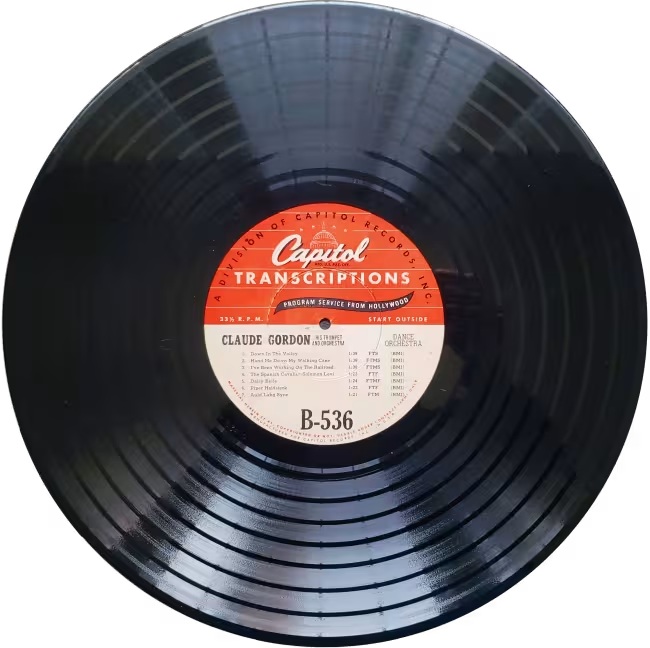
Claude Gordon Playing Auld Lang Syne
View resource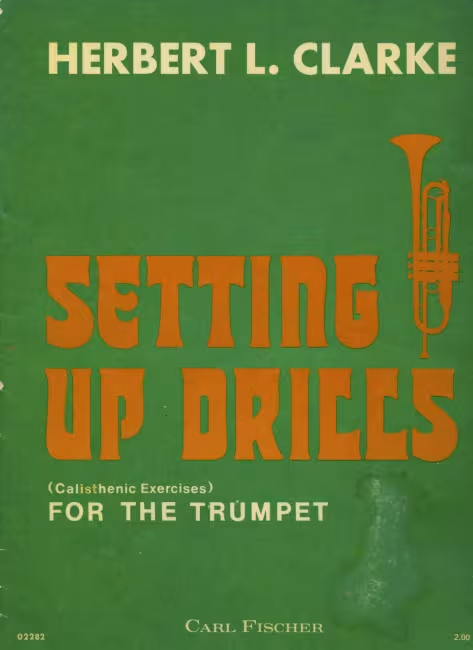
Herbert L. Clarke's Setting Up Drills
View resource
Trumpet Lessons with Claude Gordon - Dr. Larry Miller, M.D. and Jeff Purtle
View resource
WIND POWER & THE TONGUE — Purtle Brass Conference 2010 · I
View resource
How Long Does It Take To Complete Clarke's Technical Studies?
View resourceBrowse the Complete Library
Filter by category or search by title to explore the complete public collection.
Teaching Symptoms vs Teaching Causes
Teaching symptoms treats visible problems; teaching causes identifies why those problems happen and how to correct them.
View ResourceHelpful Conditions vs Causes
Helpful conditions can support improvement, but they should not be mistaken for the actual causes of efficient trumpet playing.
View ResourceWhy Students Become Confused by Contradictory Advice
Students become confused by contradictory advice when prescriptions are separated from the causes they were meant to address.
View ResourceWind Power vs Air Flow
Wind Power is not airflow. Wind Power is the prepared power source of trumpet playing established through Big Breath Chest Up.
View ResourceSupport vs Wind Power
Support and Wind Power are not the same. Wind Power is the prepared power source; Wind Control governs the use of that power.
View ResourceConfidence Is a Result, Not a Cause
Confidence is a result, not a cause. Reliable confidence grows from correct coordination, diagnosis, and repeatable practice.
View ResourceCorrelation vs Causation in Trumpet Playing
Correlation is not causation in trumpet playing. A result may occur with a habit or correction without proving that habit caused the result.
View ResourceNecessary vs Sufficient Causes
Necessary and sufficient causes help clarify which conditions are required for trumpet playing and which merely support improvement.
View ResourceCompensation vs Correct Coordination
Compensation may produce temporary results, but correct coordination creates reliable, repeatable trumpet playing.
View ResourceOwnership vs Achievement
Ownership means the student understands and can repeat the cause of improvement, not merely achieve a temporary result.
View ResourceSymptoms vs Root Causes
Symptoms describe what a trumpet player experiences, but root causes explain why the problem is happening. Correct diagnosis must identify the cause before prescribing a solution.
View ResourceWhy Good Players Give Bad Explanations
Good players may give bad explanations because performance ability does not automatically create correct diagnostic teaching.
View Resource