



Library
A structured collection of articles, Claude Gordon recordings, and study materials organized within a systematic approach to trumpet pedagogy.
The Library brings together the Clarke-Gordon tradition in one place—allowing serious players to study concepts, trace ideas, and connect recordings, written material, and practical application.
Featured from the Library
A starting selection across recordings, articles, method books, masterclasses, videos, and short answers.
Claude Gordon - Master Teacher (The Brass Herald)
View resource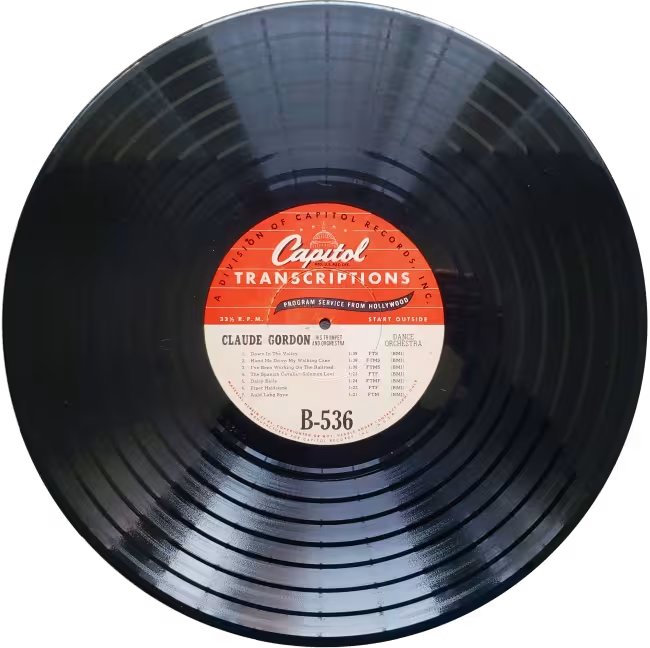
Claude Gordon Playing Auld Lang Syne
View resource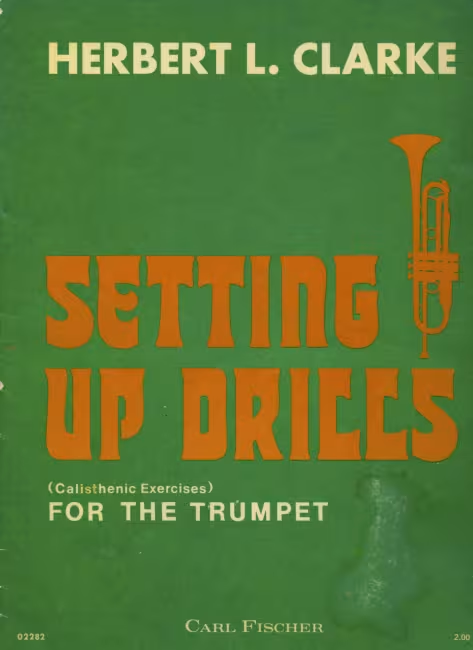
Herbert L. Clarke's Setting Up Drills
View resource
Trumpet Lessons with Claude Gordon - Dr. Larry Miller, M.D. and Jeff Purtle
View resource
WIND POWER & THE TONGUE — Purtle Brass Conference 2010 · I
View resource
How Long Does It Take To Complete Clarke's Technical Studies?
View resourceBrowse the Complete Library
Filter by category or search by title to explore the complete public collection.
Wind Control in Trumpet Playing
Wind Control is the ability to govern and direct Wind Power. Soft playing is not weakness. True control develops from strength, coordination, and systematic practice.
View ResourceHow to Learn Tongue Level
Tongue Level is learned through observation, experience, and systematic practice. Students learn where notes live and develop confidence by observing the feel of notes instead of guessing.
View ResourcePractice Structure for Trumpet Improvement
Systematic practice, rest, diagnosis, and habit development in trumpet playing.
View ResourceKeystone Habits and Symptom Chasing
Understanding primary causes, secondary symptoms, and the Keystone Habits that improve many aspects of trumpet playing simultaneously.
View ResourceHow to Practice Trumpet Effectively
Effective trumpet practice develops causes, Keystone Habits, diagnosis, rest, Wind Power, Tongue Level, and correct repetition instead of chasing symptoms.
View ResourceExercises Versus Principles in Trumpet Practice
Understanding the difference between trumpet exercises and the principles they are intended to develop.
View ResourceWhat Should I Practice First?
Correct diagnosis determines what should be practiced first. Causes come before symptoms.
View ResourceThe Diagnostic Trumpet Playing Framework
The complete diagnostic framework connecting the Seven Basic Items, Keystone Habits, cause and effect, correct diagnosis, Wind Power, Tongue Level, practice structure, and systematic improvement.
View ResourceLong Tones and Long Holds in Trumpet Practice
Static long tones and long holds are not the same. Static long tones often focus on lip strength, while Clarke and Gordon long holds occur after movement and develop Wind Power, coordination, and stability.
View ResourceBuzzing and Mouthpiece Buzzing in Trumpet Playing
Buzzing and mouthpiece buzzing are not central to Jeff Purtle diagnostic trumpet pedagogy. They often put the focus on the lips instead of Wind Power, Tongue Level, the Seven Basic Items, and the feedback of the trumpet.
View ResourceWhy Trumpet Players Develop Bad Habits
Bad trumpet habits often develop when students practice symptoms instead of diagnosing causes. Long tones, buzzing, pressure, forcing, and random repetition can reinforce the wrong coordination.
View ResourceBreathing Misconceptions in Trumpet Playing
Many trumpet players are taught to breathe from the diaphragm or stomach, but that is misleading. Correct breathing means a full comfortable breath, Big Breath Chest Up, and not allowing the chest to collapse while blowing.
View Resource