



Library
A structured collection of articles, Claude Gordon recordings, and study materials organized within a systematic approach to trumpet pedagogy.
The Library brings together the Clarke-Gordon tradition in one place—allowing serious players to study concepts, trace ideas, and connect recordings, written material, and practical application.
Featured from the Library
A starting selection across recordings, articles, method books, masterclasses, videos, and short answers.
Claude Gordon - Master Teacher (The Brass Herald)
View resource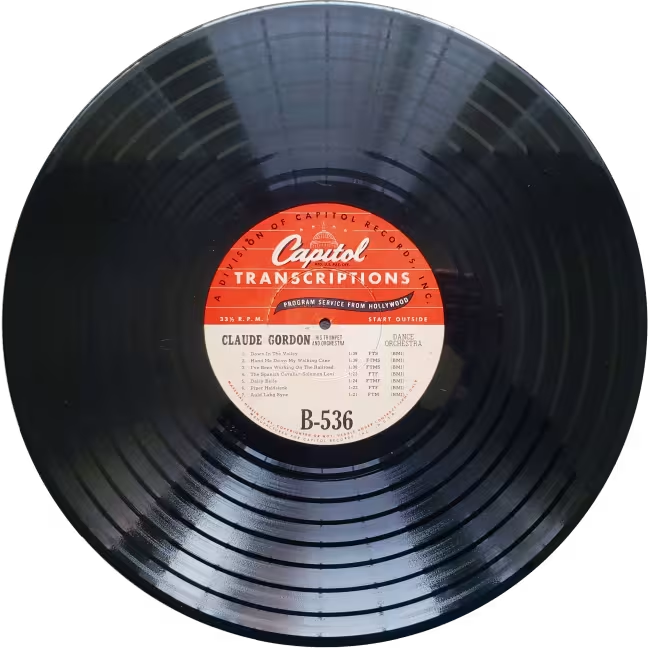
Claude Gordon Playing Auld Lang Syne
View resource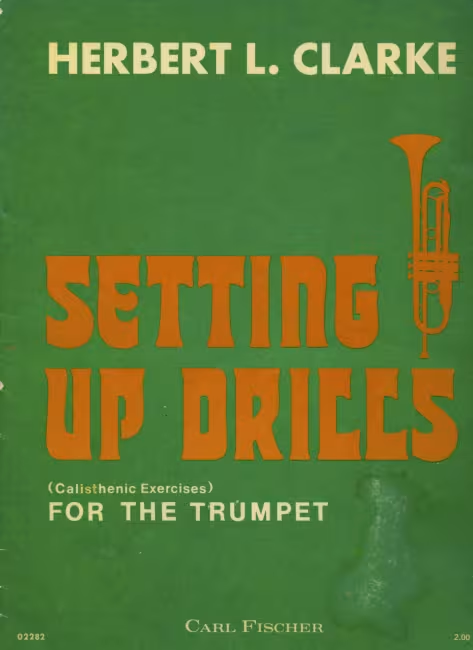
Herbert L. Clarke's Setting Up Drills
View resource
Trumpet Lessons with Claude Gordon - Dr. Larry Miller, M.D. and Jeff Purtle
View resource
WIND POWER & THE TONGUE — Purtle Brass Conference 2010 · I
View resource
How Long Does It Take To Complete Clarke's Technical Studies?
View resourceBrowse the Complete Library
Filter by category or search by title to explore the complete public collection.
Expert Performance vs Expert Teaching
Expert performance and expert teaching are different skills. Teaching requires diagnosis, explanation, and cause-and-effect understanding.
View ResourceAuthority vs Evidence in Trumpet Teaching
Authority can be useful, but evidence and correct explanation matter more than reputation alone in trumpet teaching.
View ResourceWhat Makes a Teaching Explanation Scientific?
A scientific teaching explanation connects symptoms, causes, prescriptions, and repeatable results rather than relying on slogans.
View ResourceWhy Results Alone Are Not Enough
Results alone are not enough because improvement must be connected to correct cause, diagnosis, and repeatability.
View ResourceWhy Is My Accuracy Inconsistent?
Inconsistent accuracy is usually a symptom. Correct diagnosis looks for Wind Power, Tongue Level, response, hesitation, confidence, fatigue, pressure, and coordination.
View ResourceWhy Do I Chip Notes?
Chipped notes are usually symptoms. Correct diagnosis looks for Wind Power, Tongue Level, response, hesitation, pressure, confidence, fatigue, and coordination.
View ResourceInconsistency
Inconsistency in trumpet playing usually points to an unstable cause in the player’s system, not merely a random bad day or lack of effort.
View ResourceLogical Errors in Brass Pedagogy
Logical errors in brass pedagogy occur when symptoms, results, authority, or correlation are mistaken for correct explanation and diagnosis.
View ResourceResults vs Causes
Results must be connected to causes. A visible improvement does not prove that the correct diagnosis or prescription was understood.
View ResourcePrinciples of Correct Development
Correct development in trumpet playing depends on principles, sequence, coordination, and cause and effect rather than isolated tricks.
View ResourceHow To Evaluate Trumpet Teaching Claims
Trumpet teaching claims should be evaluated by diagnosis, cause and effect, repeatability, and whether the explanation fits the player’s system.
View ResourceDescription vs Explanation
Description tells what happened; explanation identifies why it happened. Trumpet teaching requires explanation, not description alone.
View Resource