



Library
A structured collection of articles, Claude Gordon recordings, and study materials organized within a systematic approach to trumpet pedagogy.
The Library brings together the Clarke-Gordon tradition in one place—allowing serious players to study concepts, trace ideas, and connect recordings, written material, and practical application.
Featured from the Library
A starting selection across recordings, articles, method books, masterclasses, videos, and short answers.
Claude Gordon - Master Teacher (The Brass Herald)
View resource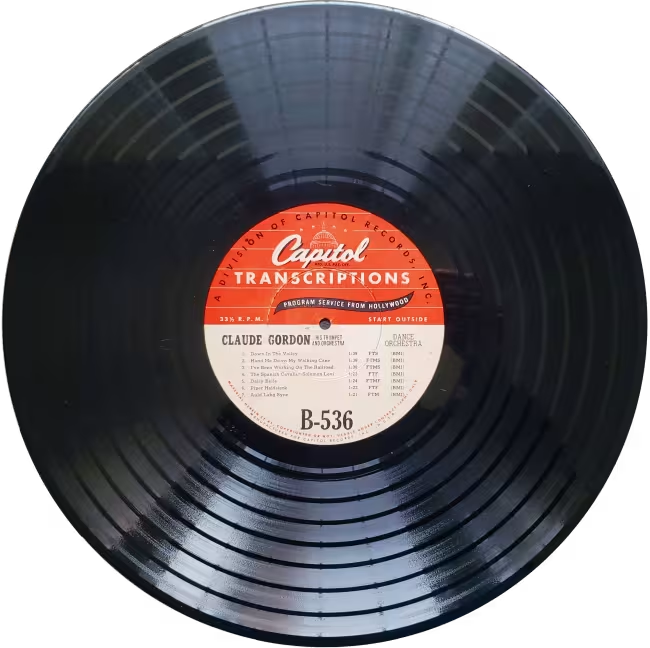
Claude Gordon Playing Auld Lang Syne
View resource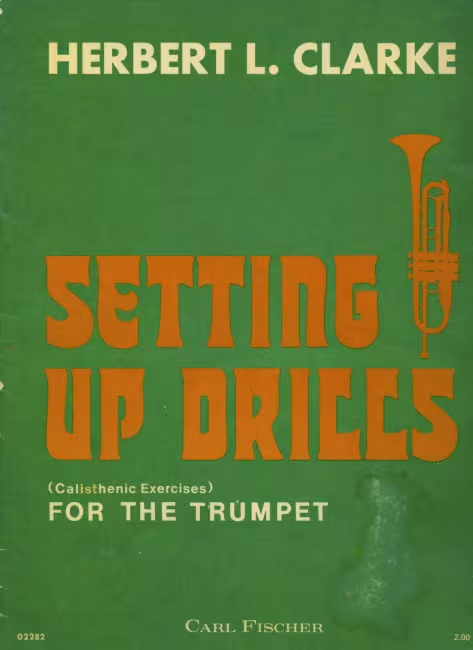
Herbert L. Clarke's Setting Up Drills
View resource
Trumpet Lessons with Claude Gordon - Dr. Larry Miller, M.D. and Jeff Purtle
View resource
WIND POWER & THE TONGUE — Purtle Brass Conference 2010 · I
View resource
How Long Does It Take To Complete Clarke's Technical Studies?
View resourceBrowse the Complete Library
Filter by category or search by title to explore the complete public collection.
Effort Versus Coordination in Trumpet Playing
Why more effort is not always better in trumpet playing, and why correct coordination produces freer, more reliable results.
View ResourceCoordination in Trumpet Playing
Coordination explains how the Seven Basic Items work together and why correct trumpet playing is not merely strength, effort, or isolated exercise practice.
View ResourceCompensation in Trumpet Playing
Understanding compensation, why bad habits develop, and how players substitute one function for another when causes are not properly developed.
View ResourceCause and Effect in Trumpet Playing
Understanding cause and effect is the foundation of correct diagnosis, intelligent practice, and systematic trumpet improvement.
View ResourceDiagnostic Trumpet Pedagogy
Diagnostic trumpet pedagogy identifies the physical causes of trumpet problems before prescribing solutions, using Wind Power, Tongue Level, Response, and efficient practice.
View ResourceWatch The Tongue
Watch The Tongue is a central Claude Gordon concept that teaches players to observe how the tongue channels pitch, response, accuracy, flexibility, and confidence.
View ResourceWhy Do I Miss Notes?
Missed notes and cracked notes are symptoms. Correct diagnosis looks for causes such as Wind Power, Tongue Level, response, hesitation, compensation, and poor practice habits.
View ResourceWhy Are My High Notes Inconsistent?
Inconsistent high notes are usually symptoms of causes such as Wind Power, Tongue Level, response, fatigue, hesitation, compensation, and poor coordination.
View ResourceHow Do I Improve Endurance?
Endurance improves through efficiency, Wind Power, Tongue Level, rest, coordination, and correct diagnosis rather than simply trying to strengthen the lips.
View ResourceWhy Do I Use Too Much Pressure?
Too much mouthpiece pressure is usually compensation. Correct diagnosis looks for missing causes such as Wind Power, Tongue Level, response, confidence, coordination, and fatigue.
View ResourceThe Seven Basic Items in Trumpet Playing
The Seven Basic Items are the coordinated physical foundations of trumpet playing. They explain why symptoms such as missed notes, tired lips, poor range, weak response, and pressure must be diagnosed through cause and effect.
View ResourceSoft Playing in Trumpet Playing
Soft playing is not weakness. Secure soft playing comes from strong Wind Power under Wind Control, Big Breath Chest Up, and a sure sound.
View Resource